Both the reading and the listening passage delve into what caused the collapse of Egyptian Old Kingdom. Significantly, the listening contradicts the reading material by presenting three counterarguments.
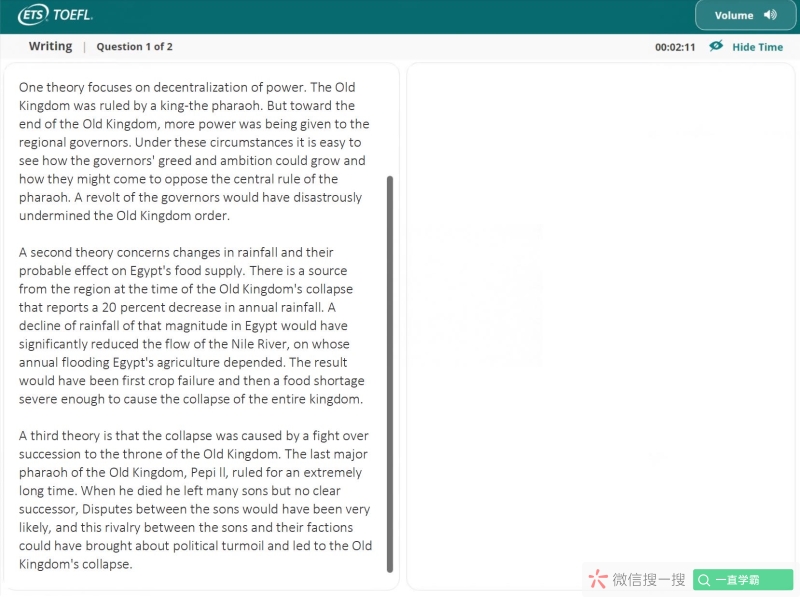
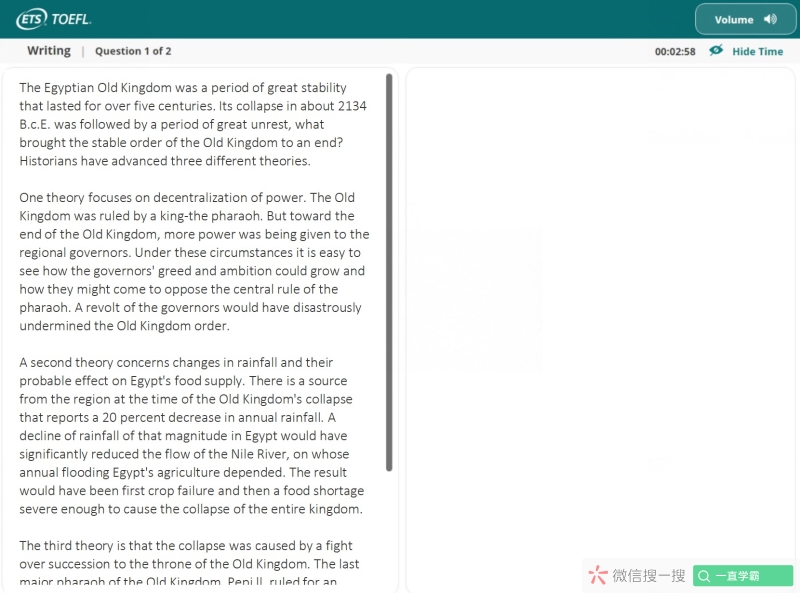
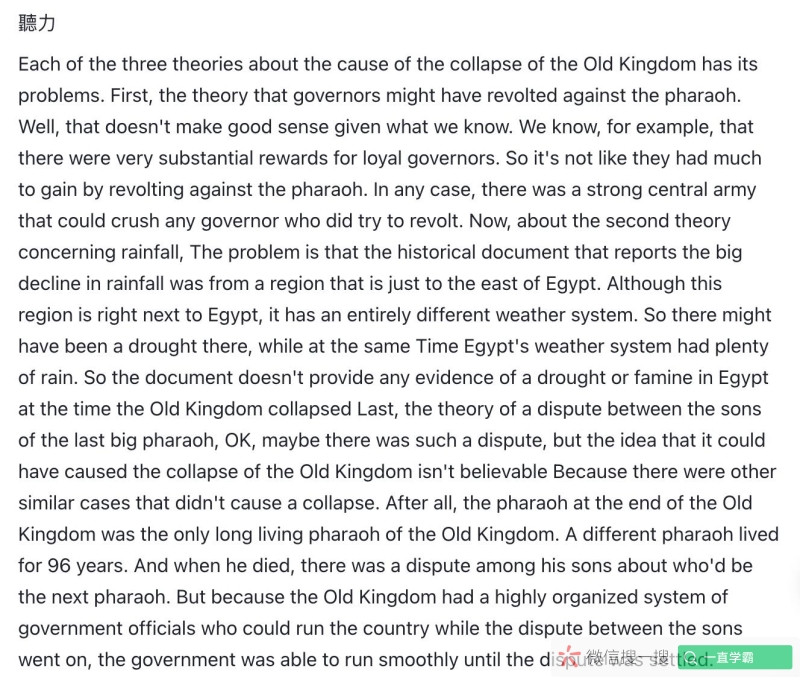
First, decentralization was to be blamed by the reading. It asserts that at the end of the Old Kingdom, power was distributed to local governors, contributing to revolts that collapsed the Kingdom. However, the listening challenges this statement by arguing that rewards were given to the regional rulers, and there is no need to against the central one. Additionally, the central army played a pivotal role in protecting the Old Kingdom from being interrupted.
Moreover, the reduction of annual rain led to the agricultural harvest to decreased as well. The Nile river flow diminished, and crops were negatively affected, storage of them dropped drastically. From the perspective of the listening, diverse places in Egypt and surrounds have multiple weather systems, which means that drought occurring in the east may not happen in the west. Furthermore, there is no solid evidence that demonstrates there were famines.
Finally, disputes among sons of the pharaoh were significant. The ambiguity of succession triggered fights. Political upheavals among fractions of sons took place continuously. The listening refuts this, highlighting that given the well-organized systems that the Egyptians held, there were other rulers encountered a similar situation, but eventually completed the transition with peace from old king to the next generation. Consequently, this is not a reasonable theory.




官方助手
2025-07-05
已批改